


Explore the swampy sphere
Updated: Sep 2, 2025
of the pirate Jean Lafitte

The pirate Jean Lafitte was rather notorious across the Gulf Coast in the 19th century, having established a smuggling empire in Barataria Bay to enable his brigands to sneak fancy merchandise and African slaves past American ships. President Thomas Jefferson’s response to French and British interference during the Napoleonic Wars was a trade embargo, which, of course, proved grossly "unfair" to New Orleans Creoles. Thus, the pirate Lafitte soon became a trusted source for hotly desired goods, including cognac and escargot, mostly commandeered off passing merchant ships.
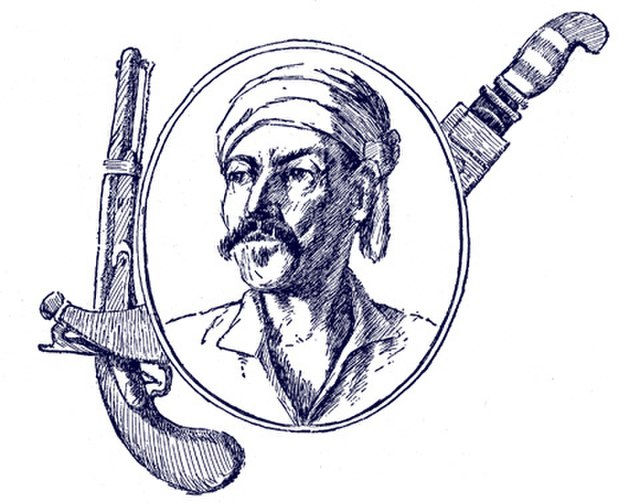
But this is not the point of my blog post. No matter how colonists regarded Lafitte at the time and despite the pirate aiding Gen. Andrew Jackson in defeating the British during the Battle of New Orleans, the National Park Service named six separate historic sites for the outlaw, including Barataria Preserve, just a short drive south from New Orleans.

As I am leading tourists around the French Quarter, as I often do, I always make a point to discuss geography. Thus, to bring up an important issue, that our coastline is slowly creeping closer and the land on which the city is built is subsiding, or more plainly, sinking! But even when Jean-Baptiste Le Moyne de Bienville founded New Orleans more than 300 years ago, the practicality of the site was questioned. Then, as now, New Orleans was essentially an island just several feet above sea level, subject to floods and hurricanes. We are living in a swamp right now!
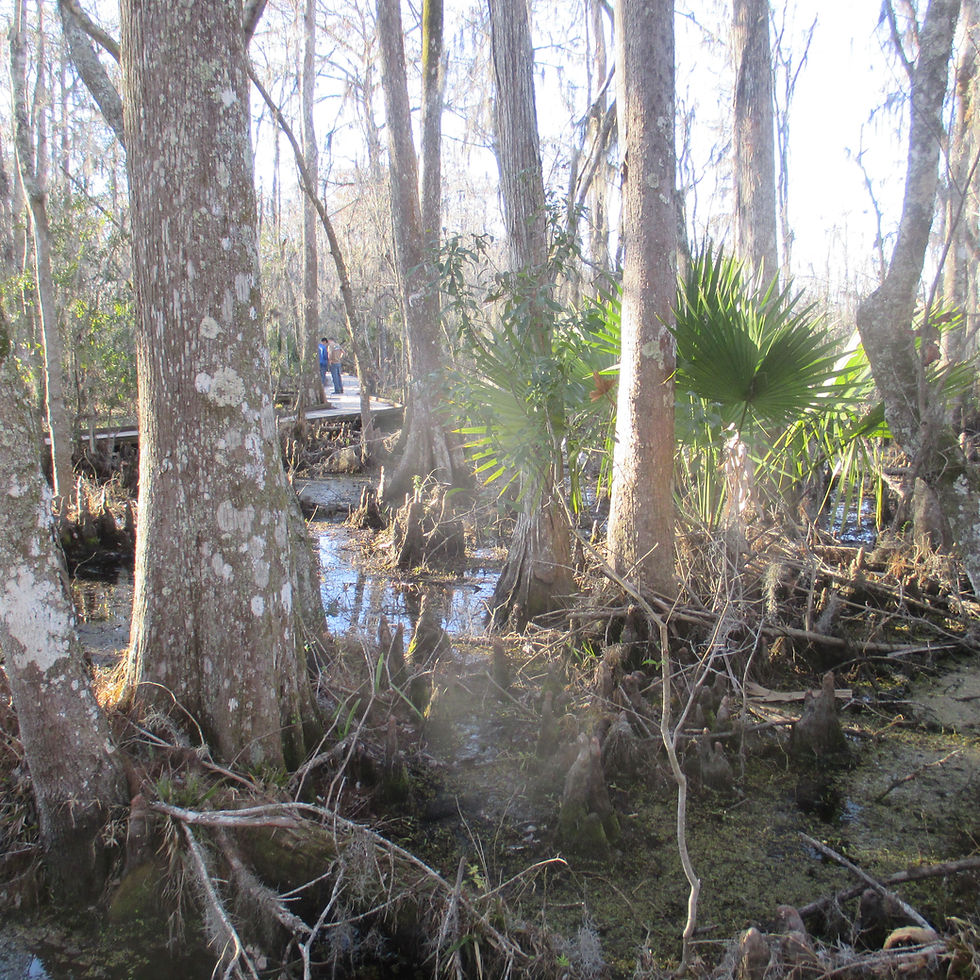
That given, we travelers now have the opportunity to experience topography similar to those traversed by explorers and pirates, just a 30-minute drive across the Mississippi over the Crescent City Connection. Heading towards Marrero on the West Bank, the scenery quickly turns to dense vegetation: Cypress trees, palmettos, and grasses luxuriating in 26,000 acres of wetlands. Lafitte Preserve is also home to 200 bird species, as well as countless gators.
I usually walk the one-mile Palmetto Trail, which starts on the south side of Hwy. 45 at the visitor center, open 9:30 a.m. - 4:30 p.m. Wednesday-Sunday, with a guided ranger walk offered at 10 a.m. The Palmetto Trails follows a winding boardwalk overlooking the swamp.
Learning materials about plants and animals are available online to make children’s excursions more educational. Several other trails, including the Bayou Coquille Trail, which starts in a prehistoric, Native American midden built with clamshells, bisects tropical wetlands and travels through an abandoned oilfield, ending at a 19th-century canal. A couple of years ago, a protective mother alligator made this trail frighteningly impassible while guarding her nest, but I believe she has graciously been relocated to her home in nearby Bayou Segnette.
Tip: Never, never approach or attempt to feed or pet an alligator! They appear slow, but move very fast.

Old Barataria Trail is a remnant of the public road built by the Spanish colonial government. The Spanish called it El Camino Real de Barataria, the royal road of Barataria. The French translated that to Le Chemin de Barataria. (The word Barataria comes from Miguel de Cervantes’ classic novel “Don Quixote de La Mancha.” In the story, Don Quixote’s companion Sancho Panza was appointed governor of an island called Barataria.) The French word "baraterie" alludes to deceit or fraud associated with smuggling. The Pirate Jean Lafitte was known to traverse these waterways.
In the old Provencal language, barataria means fraud. Sancho Panza’s island was land-locked, therefore a fake island. The name Barataria was later used as the name of the nearby bayou, the bay where it drains, and eventually the entire region.
I learned by turning off the highway at Christmas Road and venturing into Pecan Grove that in 1779, Gov. Bernado de Galvez settled farmers and fishermen from the Canary Islands, known as Islenos, here. Fifty-six families were brought to live along Bayou des Families to help protect New Orleans from a possible British invasion. French remained the dominant language of Louisiana, even under Spanish control. Flooding from the Mississippi, however, forced most to relocate just three years later, reminding us we are still on very low land.
Admission is free, but check the website for updates since everything is always changing.


Comments